

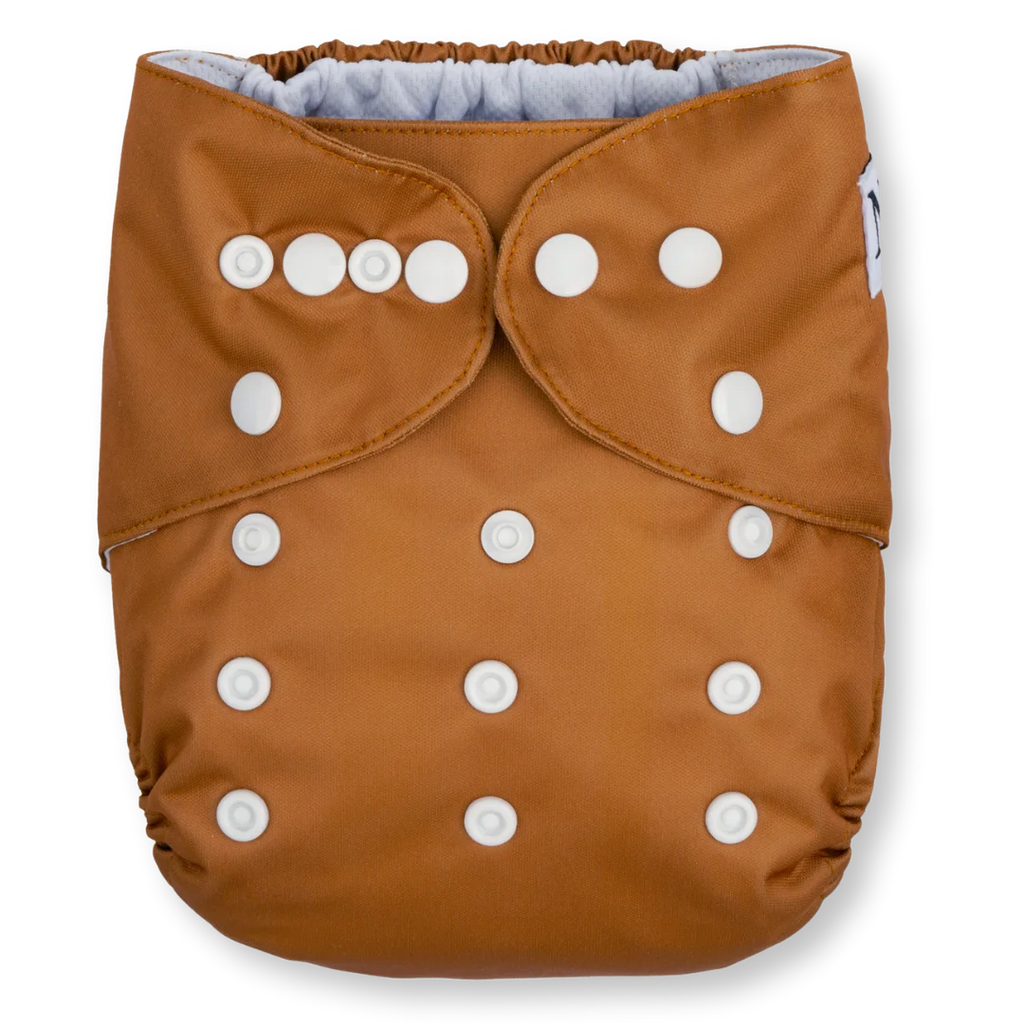



Choosing the best detergent for cloth diapers doesn't have to be complicated. The right detergent should effectively clean heavily soiled diapers without leaving behind ingredients that can interfere with absorbency.
But the detergent itself is only part of the equation. Your water hardness, washing machine, wash routine, and diaper materials can all affect how well your detergent performs.
In this guide, we'll explain what to look for in a cloth diaper detergent, compare commercial, free and clear, and more naturally formulated options, and help you choose a detergent that works with your washing machine and water conditions.
[[toc]]
[[starter-kit]]
Choosing the best detergent for cloth diapers
A good cloth diaper detergent needs enough cleaning power to remove urine, waste, oils, and everyday buildup from absorbent fabrics. One of the most important things to look for is an effective concentration of surfactants, the cleaning agents that help lift soils from fabric so they can be washed away.
You don't necessarily need a detergent labeled specifically for cloth diapers. Many mainstream laundry detergents can work well when they're compatible with your diapers, washing machine, water conditions, and wash routine.
What Are Surfactants?
Surfactants are cleaning agents that help loosen oils and soils from fabric and keep them suspended in the wash water so they can be rinsed away. Because cloth diapers are heavily soiled laundry, effective surfactants are an important part of getting them thoroughly clean.
What Else Should You Look for in a Cloth Diaper Detergent?
Enzymes are another common detergent ingredient that can help break down certain types of soils and stains. They can be especially useful when washing heavily soiled laundry.
Most importantly, avoid detergents that contain built-in fabric softeners. Fabric softening ingredients are designed to leave a coating on fibers, which can interfere with the absorbency of cloth diaper materials over time.
If your family prefers to avoid fragrances or dyes, a free and clear detergent may be a better fit for your routine. Just remember that "free and clear" describes the formulation, not necessarily its cleaning strength, so you'll still want a detergent with enough cleaning power for cloth diapers.
Quick Guide: What to Look for in a Cloth Diaper Detergent
- Effective cleaning agents: Look for a detergent with surfactants strong enough for heavily soiled laundry.
- No built-in fabric softener: Softening ingredients can coat absorbent fibers and interfere with performance.
- Compatible with your routine: Consider your water hardness, washing machine, diaper materials, and detergent concentration when determining what works best.
[[otf-set]]
New to cloth diaper laundry? Our Cloth Diaper Washing 101 Guide walks you through the entire wash process from pre-wash to drying.
Mainstream Commercial Detergents for Cloth Diapers
Mainstream detergents are a popular choice for cloth diapers because they're formulated to clean heavily soiled laundry and typically contain effective concentrations of surfactants. Many formulas also contain ingredients that help detergents perform across different water conditions.
You don't need a detergent specifically marketed for cloth diapers. Look for a detergent with effective cleaning agents and no built-in fabric softener, then consider your washing machine, water hardness, and wash routine when deciding which formula works best for your household.
If you're not sure whether you have hard or soft water, checking your water hardness is a helpful first step. We'll explain why water hardness matters later in this guide.
Tide
Tide is a commonly used mainstream detergent option for cloth diapers because its formulas contain surfactants and other cleaning agents designed for heavily soiled laundry. Tide Original may be an option for families who prefer a conventional detergent with strong cleaning performance.
When choosing a Tide formula, check the current product label for ingredients and dosing instructions, and make sure you're selecting a detergent that's appropriate for your washing machine.
OxiClean
OxiClean is best thought of as a laundry booster or stain remover rather than your primary cloth diaper detergent. An oxygen-based laundry booster can be used alongside a suitable detergent when additional stain-fighting power is needed.
If you choose to use an oxygen-based product with your cloth diapers, follow both the product directions and your cloth diaper care instructions.
Gain
Gain is another mainstream detergent option that may work well for cloth diaper laundry. As with any detergent, choose a formula appropriate for your washing machine and follow the manufacturer's dosing instructions as a starting point.
Because detergent performance can vary depending on water hardness, machine type, load size, and wash routine, pay attention to how your diapers are coming out of the wash rather than relying on one detergent recommendation for every household.
Which Commercial Detergent Should You Choose?
Rather than focusing on a single "best" brand, choose a detergent that provides enough cleaning power for heavily soiled laundry and works well with your water and washing machine. If your diapers consistently come out clean, rinse properly, and remain absorbent without lingering odor or residue, your detergent and wash routine are likely working well together.
Not sure whether your detergent or wash routine is causing the problem? Start with our Cloth Diaper Washing 101 Guide before making several changes at once.
Free & Clear Detergents for Cloth Diapers
If your family prefers a detergent without added fragrance or dyes, a Free & Clear formula may be a good option for your cloth diaper routine. Many mainstream brands offer Free & Clear detergents with surfactants and other cleaning agents that can effectively clean cloth diapers.
As with any detergent, the right amount will depend on the specific formula, load size, washing machine, and water hardness. Start with the manufacturer's directions and adjust your wash routine only if you're seeing signs that your diapers aren't getting thoroughly clean.
Tide Free & Gentle
Tide Free & Gentle is a fragrance- and dye-free mainstream detergent option that may work well for cloth diaper laundry. Its cleaning agents provide an alternative for families who want the cleaning power of a conventional detergent without added fragrance or dyes.
Check the current product label to make sure the formula is compatible with your washing machine and follow the manufacturer's dosing directions as a starting point.
Purex Free & Clear
Purex Free & Clear is another fragrance- and dye-free detergent option that may be used for cloth diaper laundry. As with other Free & Clear formulas, cleaning performance will depend on factors such as your water hardness, machine type, load size, and wash routine.
A Note About 'Free and Clear' Formulas:
Not all Free & Clear detergents have the same concentration or cleaning ingredients, so don't assume that every formula requires more detergent simply because it is fragrance- and dye-free.
Start with the manufacturer's recommended amount for your load size and soil level. If your diapers aren't coming out fully clean, consider the entire wash routine before simply adding more detergent. Load size, agitation, water hardness, wash temperature, and detergent concentration can all affect cleaning performance.
If you have hard water, you may also need to account for mineral content when building your wash routine. We'll cover hard water and water-softening options later in this guide.
Free & Clear formulas are available from many mainstream detergent brands, giving families more options when they prefer to avoid added fragrance or dyes. The most important consideration is still cleaning performance: your diapers should come out thoroughly clean without lingering odor or residue.
The best natural detergent for cloth diapers
If you prefer a plant-based or naturally formulated detergent, there are options that can work for cloth diaper laundry. The key is choosing a true detergent with enough cleaning power for heavily soiled fabrics, rather than relying on the word “natural” on the label.
Look for effective surfactants and consider whether the formula also contains enzymes or other cleaning agents. Just as with a conventional detergent, performance will depend on the detergent concentration, your washing machine, water hardness, load size, and wash routine.
Follow the manufacturer's dosing instructions as a starting point rather than automatically using more detergent. If your diapers aren't coming out thoroughly clean, evaluate the entire wash routine before increasing the amount.
[[dte-review]]
Seventh Generation
Seventh Generation offers plant-based laundry detergent options, including fragrance- and dye-free formulas. When considering one for cloth diapers, check the current ingredient list for effective surfactants and other cleaning agents, and choose a formula appropriate for your washing machine.
Because product formulations can change, follow the current label for dosing and machine compatibility.
Foca Laundry Detergent
Foca is another detergent that has been used in cloth diaper wash routines. When considering Foca or another less familiar detergent, check the current formulation for surfactants and cleaning agents, along with the manufacturer's directions for machine compatibility and dosing.
Water hardness should also be considered when determining whether a detergent works well for your routine.
Allen's Naturally
Allen's Naturally is another laundry product you may encounter when researching cloth diaper wash routines. Before using it, check the current product instructions and ingredient list to determine whether the specific formula provides the cleaning agents needed for your routine and whether it is compatible with your washing machine.
If a laundry product is being used primarily as a booster rather than a complete detergent, pair it with an effective detergent rather than relying on the booster alone to clean heavily soiled diapers.
What About Specialty and Alternative Laundry Products?
Products marketed specifically toward natural laundry or cloth diapering can vary considerably in their ingredients and cleaning strength. Before using one as your primary detergent, check whether the formula contains effective surfactants and is intended to clean heavily soiled laundry.
If a product is primarily a laundry booster or doesn't provide sufficient cleaning agents on its own, use it only for its intended purpose alongside an effective detergent.
The Bottom Line on Natural Detergents
“Natural,” “plant-based,” and “Free & Clear” don't automatically tell you how well a detergent will clean cloth diapers. Instead of choosing based on the front of the package alone, look at the detergent's cleaning ingredients, follow the manufacturer's directions, and pay attention to how your diapers perform after washing.
Clean diapers should come out without lingering odor or visible soil and continue absorbing properly.
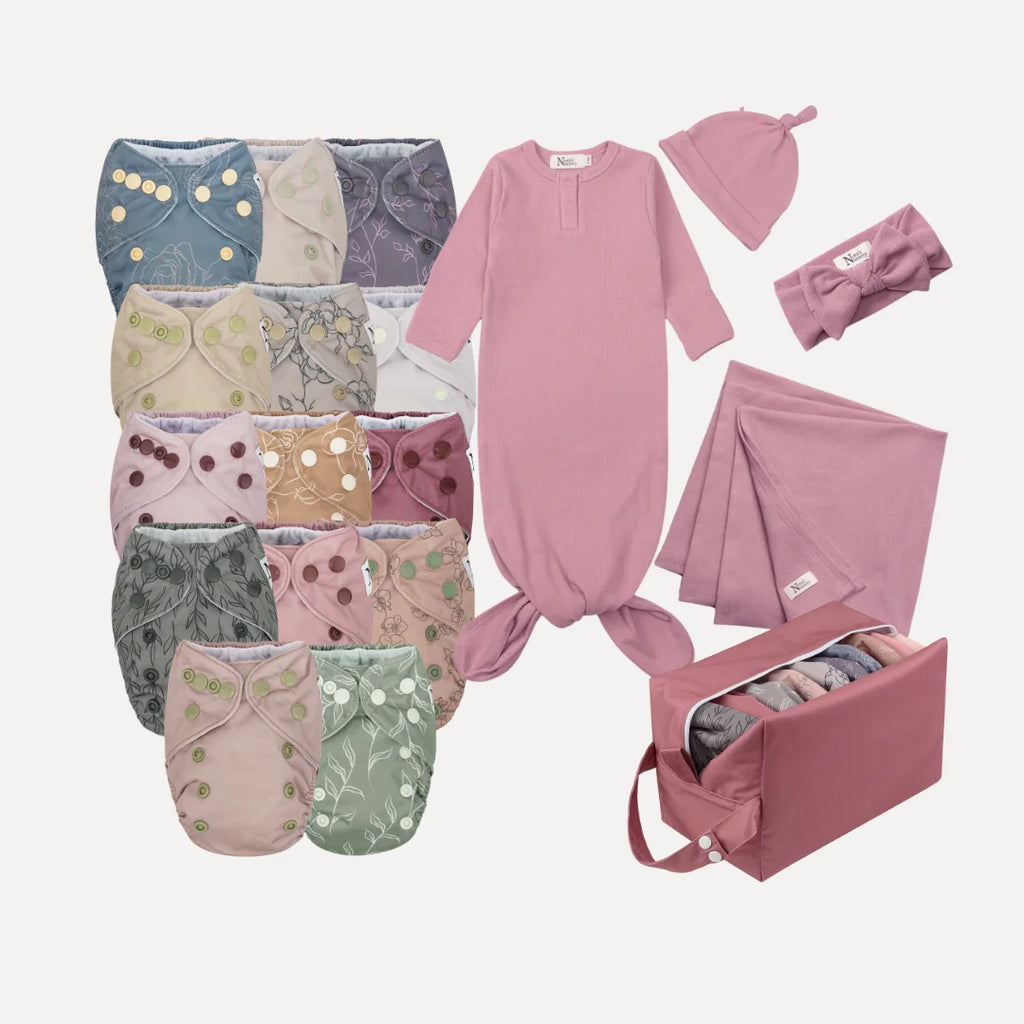
Once you've found a wash routine that works, having enough diapers in rotation can make laundry day much easier. Shop Nora's Nursery Cloth Diaper Sets to build a stash that fits your routine.
What About Homemade Laundry Detergent for Cloth Diapers?
Homemade laundry recipes often use ingredients such as washing soda, Borax, oxygen-based laundry boosters, or grated soap. While some of these ingredients can support a wash routine, they don't necessarily function as a complete laundry detergent.
Washing soda can help soften water and boost cleaning performance, while Borax is commonly used as a laundry booster and water-softening agent. However, neither replaces the surfactants found in a properly formulated detergent.
For cloth diapers, which are heavily soiled laundry, we recommend using an effective detergent as the foundation of your wash routine rather than relying on a homemade mixture of laundry boosters alone.
Why We Don't Recommend Laundry Soap for Cloth Diapers
Soap and detergent aren't the same thing. Traditional soaps made from fats or oils can interact with minerals in wash water and leave residue on fabric, particularly in hard water. Over time, that residue can interfere with how well cloth diapers clean and absorb.
For this reason, we recommend choosing a true detergent with effective surfactants rather than using grated bar soap or soap-based homemade laundry recipes for your regular cloth diaper wash routine.
A soap-free DIY mixture isn't automatically a complete detergent either. Washing soda, Borax, and oxygen-based products can all have useful roles as laundry boosters, but a cloth diaper wash routine still needs effective cleaning agents capable of removing soils from the fabric.
If you prefer a simpler or more naturally formulated wash routine, look for a complete detergent that meets those preferences rather than replacing detergent with laundry boosters alone.
Want to understand why traditional laundry soap can be problematic for cloth diapers? Read Soaps and Why We Don't Use Them for a deeper explanation.
Can Laundry Boosters Still Be Useful?
Yes. Ingredients such as washing soda, Borax, and oxygen-based laundry products can have specific uses within a cloth diaper wash routine. Depending on your water conditions and laundry needs, they may help with water hardness, stains, or additional cleaning support.
The important distinction is that a laundry booster supports your detergent rather than automatically replacing it.
[[ebook]]
Know Your Washing Machine: Front Load vs. Top Load
Choosing a suitable detergent is only one part of an effective cloth diaper wash routine. Your washing machine also affects how much water is used, how the diapers move through the wash, and how effectively soil and detergent are rinsed away.
Understanding how your machine cleans will help you make better decisions about detergent amount, load size, and wash settings.
Top-Loading Washing Machines
Top-loading machines vary in design. Traditional models may use a central agitator, while many high-efficiency top loaders use a low-profile impeller and less water.
An effective cloth diaper wash needs enough movement between items to help loosen and remove soil. Avoid overloading the machine, but also make sure you have enough laundry in the drum for the diapers to move and agitate effectively.
Follow your washing machine's instructions when selecting water levels and cycles rather than automatically choosing the highest water setting.
Front-Loading and High-Efficiency Machines
Front-loading and high-efficiency machines generally use less water and clean laundry through a tumbling action. Because these machines are designed to work with lower water levels, use a detergent labeled for HE machines and avoid adding more detergent simply because you see less water during the cycle.
Load size is especially important. The diapers need enough room to move and tumble while still having enough items in the drum to create effective mechanical action.

What Every Washing Machine Needs for Clean Cloth Diapers
Regardless of which machine you use, an effective cloth diaper wash depends on the right balance of detergent, water, mechanical action, temperature, and load size.
Follow your machine's care instructions and use cycles designed for heavily soiled laundry when appropriate. If your diapers aren't coming out fully clean, evaluate the entire wash routine rather than assuming you simply need more detergent or more water.
Hard vs. Soft Water: Why Water Hardness Matters
Water hardness refers to the amount of dissolved minerals, primarily calcium and magnesium, in your water. The more minerals your water contains, the harder it is considered.
Hard water can make laundry more challenging because those minerals can interfere with how effectively detergent cleans. Over time, mineral deposits may also accumulate on cloth diaper fabrics, especially if your wash routine isn't adjusted for your water conditions.
That's why knowing your water hardness is an important part of building a cloth diaper wash routine that works for your home.
Have hard water at home? Our Hard Water and Cloth Diapers Guide explains how mineral content can affect your wash routine and what you can do about it.
How Hard Water Can Affect Cloth Diapers
When a wash routine isn't adjusted for hard water, mineral buildup can make it more difficult to get cloth diapers thoroughly clean. Over time, you may notice:
- Lingering odors or reduced cleaning performance: Minerals can interfere with detergent performance and contribute to buildup on fabrics.
- Changes in fabric feel or absorbency: Mineral deposits can leave absorbent materials feeling stiff or affect how efficiently they take in liquid.
- A wash routine that needs adjusting: Depending on your water hardness and detergent, you may need to adjust detergent dosing or use an appropriate water-softening agent.
Preventing unnecessary buildup: Managing hard water can help reduce mineral deposits on diaper fabrics and keep your wash routine performing effectively over time.
What About Soft Water?
Soft water contains fewer hardness minerals, so detergent can generally work effectively at lower amounts than it may require in hard water. Because detergent can also rinse differently in soft water, avoid automatically increasing the dose if your diapers are already coming out thoroughly clean.
Use the detergent manufacturer's directions as your starting point and adjust based on your machine, load size, soil level, and wash results
How Hard Is Your Water?
If you're not sure whether you have hard or soft water, start by checking your local water report or testing your water at home. Once you know your approximate water hardness, you can make more informed decisions about detergent dosing and whether a water softener may be helpful.
Dealing with mineral buildup or very hard water? Read our complete [Hard Water and Cloth Diapers] guide for more detailed troubleshooting.
Choosing a Cloth Diaper Detergent for Hard Water
If you have hard water, choose a detergent with effective surfactants and enough cleaning power for heavily soiled laundry. Some detergent formulas also contain ingredients that help manage hardness minerals during the wash.
Rather than choosing a detergent based on whether it's marketed specifically for cloth diapers, look at the complete formula and consider how it performs with your water and washing machine.
Some detergents contain ingredients designed to help manage minerals in wash water, which can make them useful in harder water conditions. However, formulation varies by product, so don't assume that every powder or liquid detergent will perform the same way.
Check the current detergent label and your washing machine instructions when choosing a formula.
If hard water is affecting your wash routine, a water-softening agent may help your detergent work more effectively. Before making large changes to detergent amounts, determine your approximate water hardness and make adjustments gradually based on your detergent directions and wash results.
Do You Need a Water Softener?
Not every cloth diaper wash routine needs an additional water softener. But if your water contains enough hardness minerals to interfere with cleaning, adding an appropriate water-softening product can help your detergent perform more effectively.
The right option depends on your water hardness, detergent, and washing machine.
Choosing a Water Softener for Cloth Diapers
If hard water is interfering with your wash routine, a water-softening agent can help manage hardness minerals so your detergent can clean more effectively.
Not every household needs an additional water softener. Whether you need one, and how much you need, depends on your water hardness, detergent, washing machine, and wash routine.
Calgon
Calgon is a laundry water-softening product that may be added to a wash routine when additional help managing hard-water minerals is needed. If you use it, follow the current product directions and adjust based on your water hardness and detergent routine.
What About RLR?
RLR is more relevant when troubleshooting mineral or detergent buildup than when choosing an everyday water softener for your regular wash routine.
If you're dealing with persistent buildup, odors, or absorbency problems, follow the appropriate troubleshooting process rather than automatically adding a stripping product to every wash.
Not sure whether your diapers need to be stripped? See our complete guide to [Stripping and Restoring Cloth Diapers].
Borax
Borax is commonly used as a laundry booster and can help manage hard-water minerals. If you choose to include Borax in your cloth diaper wash routine, the amount should be based on your water conditions and the product's directions rather than added automatically to every load.
Washing Soda
Washing soda is another laundry booster that can help manage water hardness and support detergent performance. As with Borax, it should be used as part of a complete wash routine rather than as a replacement for detergent.
Whole-Home Water Softening Systems
Some homes use a whole-home water softening system to reduce hardness minerals before the water reaches the washing machine. If your home already has one, keep that in mind when determining your laundry routine because the water reaching your washer may be much softer than your local untreated water supply.
Do You Need to Strip Your Diapers First?
Not necessarily. Adding a water softener to your routine doesn't automatically mean your diapers need to be stripped first.
Stripping is a troubleshooting step for specific buildup problems, not a routine part of changing detergents or adjusting for hard water. If your diapers are clean, absorbent, and free from persistent odor, there's generally no reason to strip them simply because you're adjusting your wash routine.
Already dealing with persistent odor, mineral buildup, or reduced absorbency? Our Guide to Stripping and Restoring Cloth Diapers can help you determine whether stripping is actually necessary.
Do I Need a Water Softener?
You may not need one if: your diapers are getting thoroughly clean and your detergent is performing well with your water.
Consider one if: you know you have hard water and minerals appear to be interfering with your wash routine.
Already have a whole-home softener? Base your laundry routine on the water actually reaching your washing machine, not simply your area's reported hardness.
Detergent vs. Soap: What's the Difference?
Although the words are sometimes used interchangeably, laundry detergent and traditional soap aren't the same thing.
Detergents contain surfactants formulated to lift soils from fabric and keep them suspended in wash water so they can be rinsed away. Traditional soaps are generally made from fats or oils and can interact with minerals in water, potentially leaving residue on fabrics.
For heavily soiled cloth diaper laundry, we recommend using an effective laundry detergent rather than relying on traditional laundry soap as your primary cleaning product.
Want to learn more? Read [Soaps and Why We Don't Use Them].
Does Cloth Diaper Material Affect Your Detergent Choice?
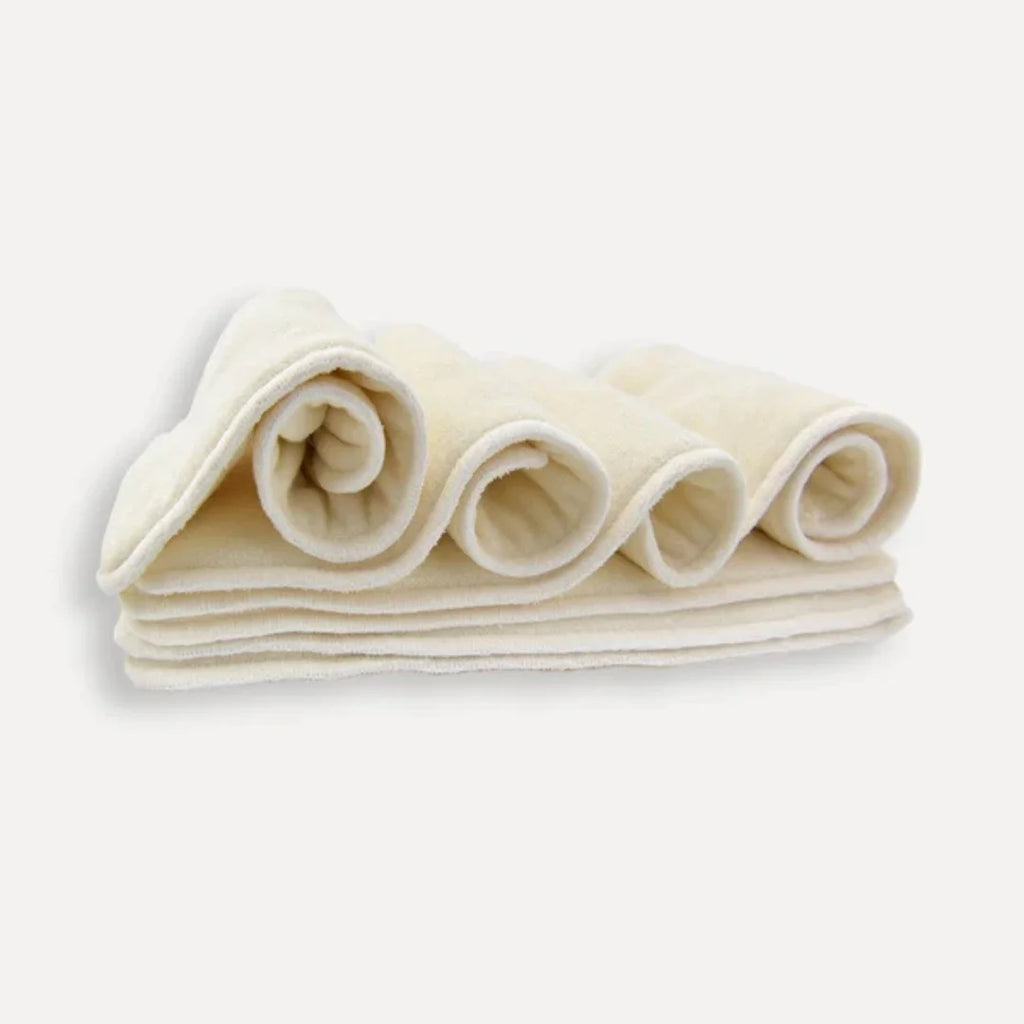
Cloth diapers and inserts can contain several different materials, including microfiber, polyester, cotton, bamboo, and hemp. These fabrics have different absorbency, drying, and preparation needs, but they can generally be washed together using an effective cloth diaper wash routine.
Rather than choosing a completely different detergent for each fabric, focus on a detergent that thoroughly cleans heavily soiled laundry without leaving ingredients that can interfere with absorbency.
Synthetic Cloth Diaper Materials
Synthetic materials commonly found in cloth diapers include polyester-based fabrics such as microfiber and microfleece. These materials tend to dry quickly and generally require less preparation before first use than natural-fiber inserts.
During regular washing, the goal is the same as with any cloth diaper material: thoroughly remove soil and detergent so the fabric remains clean and performs as intended.
Natural-Fiber Inserts
Cotton and hemp inserts are popular for their absorbency, and some bamboo inserts may also contain natural and synthetic fibers depending on their construction.
New natural-fiber inserts often require preparation before reaching their full absorbency. Follow the care instructions for your specific inserts, especially before their first use.
New natural-fiber inserts may require several washes before reaching their full absorbency. This initial preparation is different from your regular cloth diaper wash routine, so once the inserts are prepped, they don't automatically require additional wash cycles simply because they're made from natural fibers.
Not Sure Which Insert Material You Have?
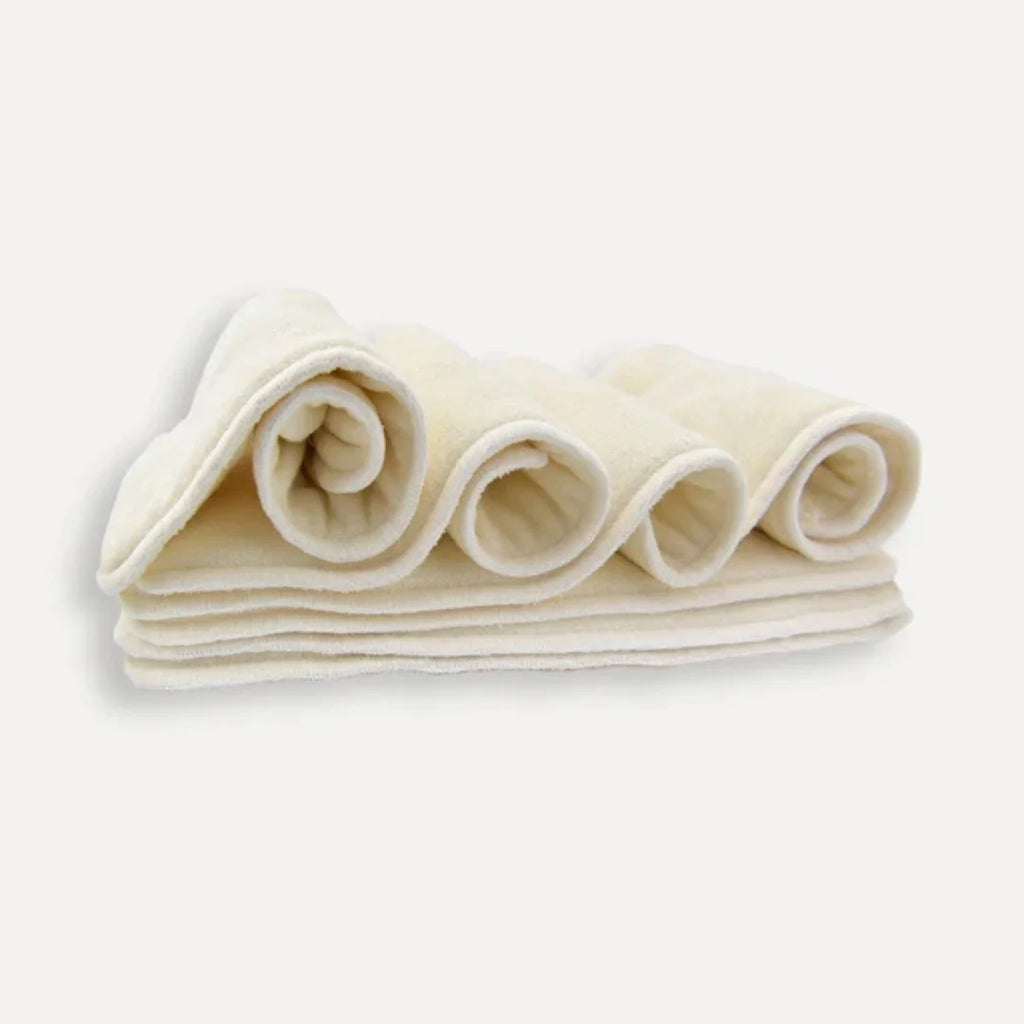
Different insert materials offer different combinations of absorbency, trimness, and drying time. If you're building or adjusting your cloth diaper setup, compare Nora's Nursery insert options to see how bamboo, hemp, and other absorbent materials can fit into your routine.
Not sure which insert material is right for your routine? Explore Nora's Nursery Inserts to compare absorbency options and find the combination that works best for your family.
Does Cloth Diaper Material Affect Your Detergent Choice?
Cloth diapers and inserts can contain several materials, including microfiber, polyester, cotton, bamboo, and hemp. While these fabrics have different absorbency, drying, and preparation needs, they can generally be washed together using an effective cloth diaper wash routine.
A properly formulated detergent can clean both synthetic and natural cloth diaper materials. Rather than choosing a detergent based solely on fabric type, focus on effective cleaning and follow the care instructions for your specific diapers and inserts.
New natural-fiber inserts may require preparation before reaching their full absorbency. Once they're prepped, however, they don't automatically need additional wash cycles simply because they're made from natural fibers.
Not sure which insert is right for your routine? Compare Nora's Nursery insert options to learn more about absorbency, materials, and layering.
How to Wash Cloth Diapers for the Best Clean
Once you've chosen a detergent that works with your water and washing machine, the next step is building a consistent wash routine. Always follow the care instructions for your diapers and washing machine, but a typical cloth diaper routine includes a pre-wash followed by a thorough main wash.
The goal is to give your detergent enough water, time, temperature, and mechanical action to remove soil effectively.
1. Remove Solids
Before washing, remove solid waste according to your usual cloth diaper routine. Once diapers are ready for laundry, they can move into the pre-wash.
Stubborn stains can be treated separately when needed, but routine staining doesn't necessarily mean the diaper isn't clean.
2. Run a Pre-Wash
Start with a pre-wash or short wash cycle to remove much of the urine and soil before the main wash. This gives your detergent and fresh wash water a better chance to thoroughly clean the diapers during the main cycle.
Choose an appropriate cycle for your machine and follow Nora's Nursery care instructions for recommended wash temperatures.
3. Run the Main Wash
Follow the pre-wash with a thorough main wash using an effective detergent. Choose a cycle that provides enough time and mechanical action for heavily soiled laundry.
If you have a high-efficiency machine, use an HE-compatible detergent. Follow the detergent manufacturer's dosing instructions as a starting point, taking your load size, soil level, and water hardness into account.
Get the Load Size Right
Cloth diapers need enough room to move during the wash, but the machine also needs enough laundry to create effective mechanical action. Avoid packing the drum too tightly or assuming that more water will automatically produce a better clean.
Use the cycles and water settings recommended for your washing machine rather than manually overriding its normal operation.
Do Cloth Diapers Need an Extra Rinse?
An extra rinse shouldn't automatically be necessary after every wash. If your diapers are consistently coming out clean and free from excess detergent residue, there's no need to add additional rinse cycles simply as a precaution.
This can be especially important in hard water, where additional rinses introduce more mineral-containing water to the fabric.
Choose an Appropriate Wash Temperature
Follow the care instructions for your specific diapers and inserts when selecting wash temperature. Avoid assuming that hotter is always better, particularly when washing components containing elastic or waterproof materials.
Adjust for Your Water Hardness
If you know you have hard water and it's interfering with cleaning, an appropriate water-softening agent may help your detergent perform more effectively. If you have soft water, you may find that less detergent is needed.
Make changes gradually and evaluate the results rather than changing several parts of your routine at once.
Dry According to the Care Instructions
Once your diapers are clean, dry them according to the care instructions for each component. Inserts and absorbent materials may have different drying needs than covers or other components containing elastic and waterproof materials.
Before storing them, make sure diapers and inserts are fully dry.
Cloth Diaper Wash Routine at a Glance
1. Remove solids
Prepare soiled diapers for washing.
2. Pre-wash
Remove the majority of urine and soil.
3. Main wash
Use an effective detergent and an appropriate cycle for heavily soiled laundry.
4. Dry
Follow the care instructions for your diapers and inserts.
Diapers Still Aren't Coming Out Clean?
Before switching detergents, check:
- Water hardness: Hard or soft water can change how your detergent performs.
- Load size and washing machine settings: Your diapers need enough mechanical action to get thoroughly clean.
- Detergent amount: Too little may not provide enough cleaning power, while unnecessarily increasing detergent can make troubleshooting more difficult.
Persistent odors, reduced absorbency, or suspected buildup may mean it's time to troubleshoot further rather than simply adding more detergent.
Choosing the Best Detergent for Your Cloth Diapers
There isn't one detergent that works best for every cloth diapering household. The right choice depends on your detergent's cleaning power, your washing machine, water hardness, load size, and overall wash routine.
Start with a detergent that contains effective cleaning agents and doesn't contain built-in fabric softener. Follow the manufacturer's dosing instructions as a starting point, then pay attention to your wash results. Clean cloth diapers should come out without lingering odor or visible soil and continue absorbing properly.
If something isn't working, don't assume you need to replace your entire routine. Change one factor at a time so you can identify what's actually causing the problem.
Suspect buildup instead? Our Stripping and Restoring Cloth Diapers Guide walks through the signs that stripping may actually be needed.
Still Having Trouble Getting Your Cloth Diapers Clean?
Persistent odor, buildup, or absorbency problems don't always mean your detergent is the problem. Your water hardness, detergent amount, load size, washing machine settings, or overall wash routine may need adjusting.
Diapers leaking even though they seem clean? Visit our Cloth Diaper Fit and Leak Troubleshooting Guide to determine whether you're dealing with fit, saturation, insert placement, or an absorbency issue.
Make Cloth Diaper Laundry a Little Easier
A reliable wash routine starts with having enough diapers and inserts to comfortably make it between wash days. Explore Nora's Nursery cloth diapers, inserts, and accessories to build a setup that works for your family's routine.
Finding the right detergent and wash routine can take a little adjustment at first, especially when you're learning how your washing machine and water hardness affect the process. Once you find the combination that gets your diapers consistently clean, there's no need to overcomplicate it.
Keep your routine simple, make adjustments one at a time when needed, and let your clean diapers tell you whether the routine is working.
Need more help troubleshooting your routine? Start with our Cloth Diaper Washing 101 Guide, learn how to manage minerals in our Hard Water and Cloth Diapers Guide, or visit our Stripping and Restoring Cloth Diapers Guide if you're dealing with persistent buildup or odor.
Ready to build a cloth diaper routine that works for your family? Shop Nora's Nursery 'Build Your Own Starter Kit' to get everything you need!


